Ground data interpretation
Workflows to organise borehole logs, cone penetration test profiles and laboratory results, check for gaps and inconsistencies, and keep measurements traceable to their source.
In development

 Illustrative image
Geotechnical engineering · AI and data
GeoIntellex is developing tools that help engineering teams interpret ground investigation data and make better-informed decisions about foundations. We start with offshore wind, where site-specific seabed conditions influence how turbine foundations are designed.
Below the waterline
Engineers interpret the ground between test locations and decide which uncertainty matters for design. Our initial focus is how data and modelling can support that interpretation.
Conceptual illustration with synthetic data. Not to scale. Not a project result.
Featured application
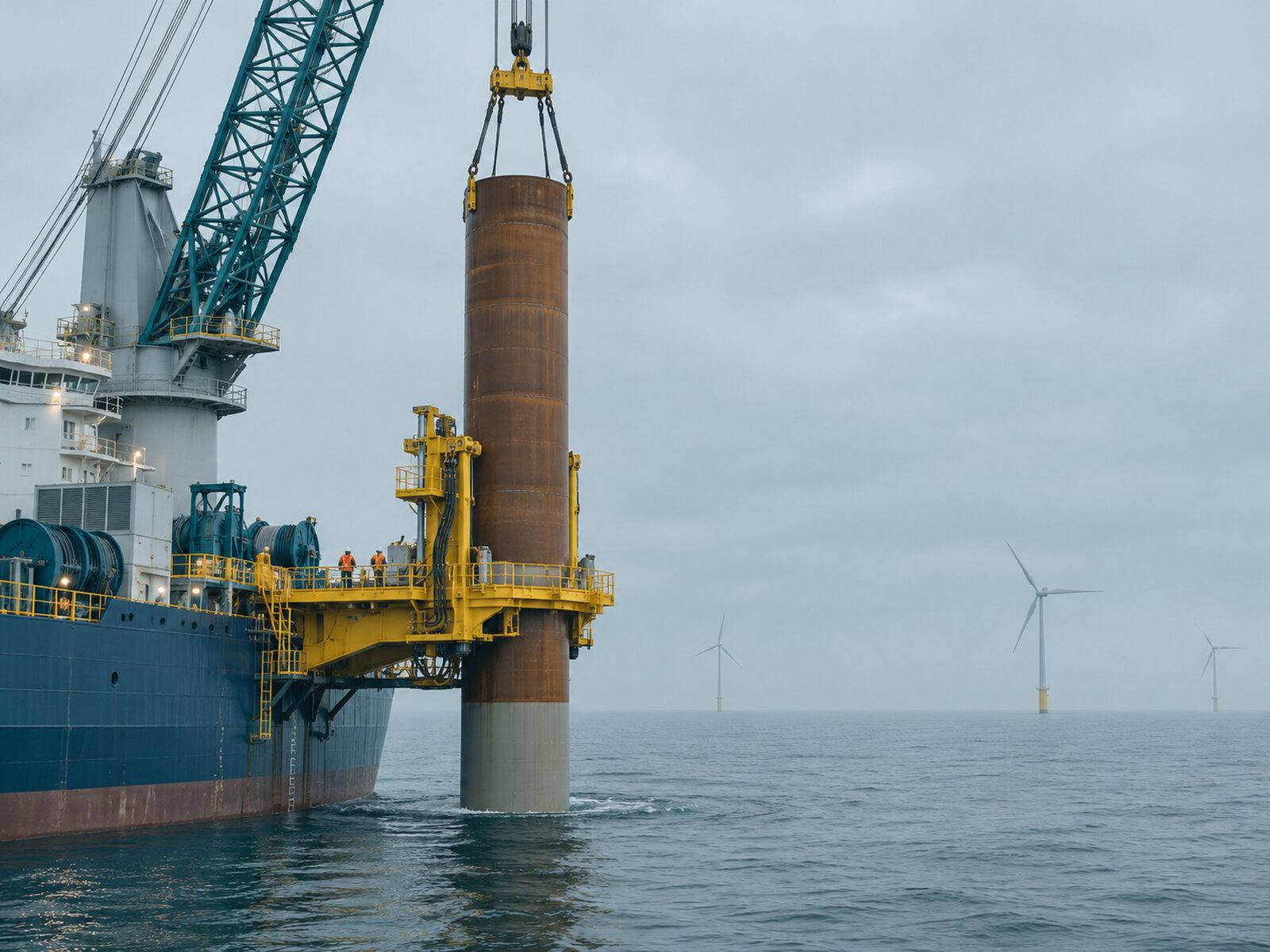
We are exploring how data from seabed investigations can improve estimates of soil properties used when assessing turbine foundations, including monopiles.
Technology focus
Workflows to organise borehole logs, cone penetration test profiles and laboratory results, check for gaps and inconsistencies, and keep measurements traceable to their source.
Models that combine machine learning with geotechnical knowledge and numerical simulation to estimate soil properties and represent uncertainty.
Tools under consideration for comparing foundation options and assessing where further site investigation could change the preferred option.
Tell us what decision your team is trying to make and where better ground information could help.